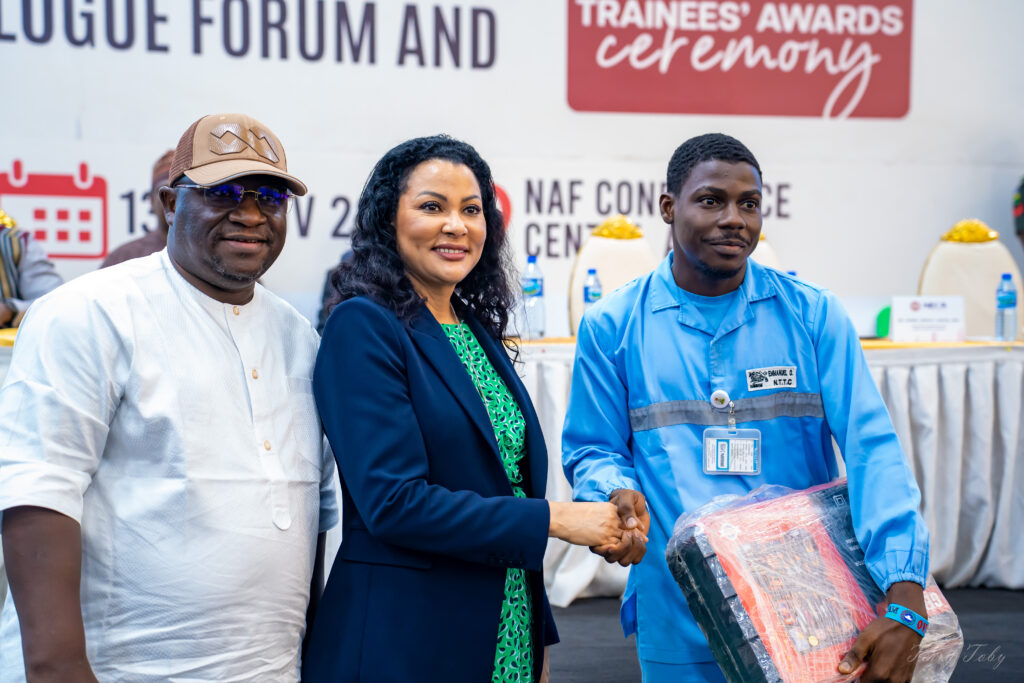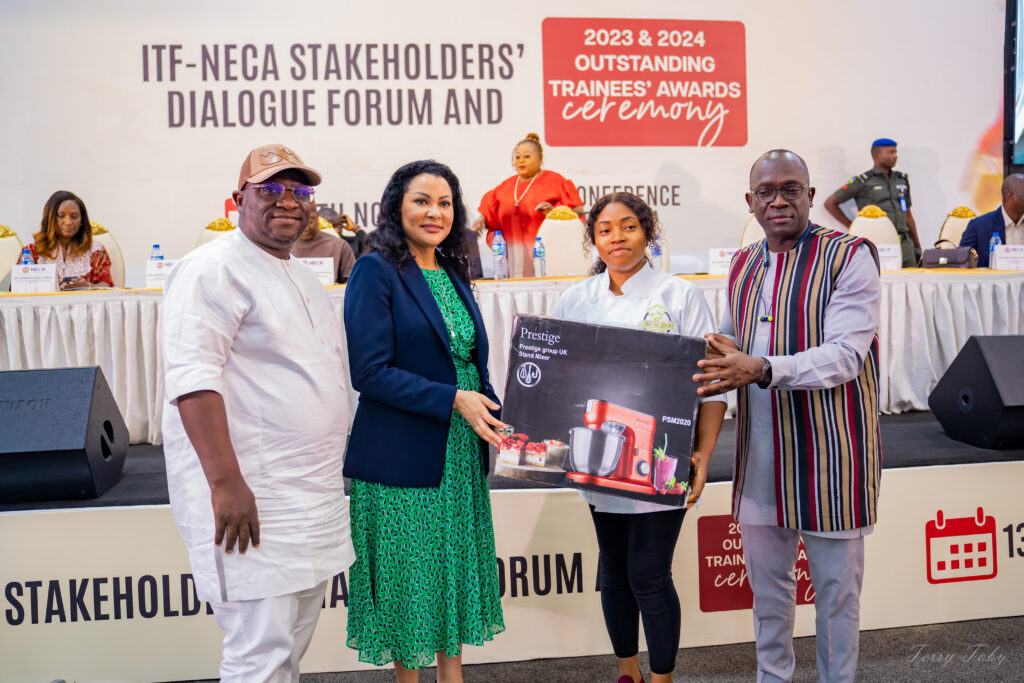
ITF Skill-Up Artisans Programme (SUPA)
The Skill-Up Artisans Programme (SUPA) is a nationwide capacity-building initiative led by the Industrial Training Fund (ITF) to retrain, certify, and professionalize Nigerian artisans across multiple trades. Designed to close the skills gap in the informal sector, SUPA is targeted at transforming millions of artisans into globally competitive, certified professionals capable of securing better local and international employment opportunities.
Since its launch, the programme has evolved into one of the most ambitious skill development interventions in recent years, projected to train and certify 10 million artisans in its full cycle. As of mid-2024, over 522,000 artisans had already registered across more than 20 technical and vocational trades, with a gender distribution of roughly 319,000 males and 203,000 females. These figures continue to grow as the programme expands its footprint across the 36 states and the FCT.
The structure of SUPA is organized into multiple learning phases, beginning with a foundation stage followed by competency-based technical training and ending with formal certification. The programme not only focuses on practical, industry-relevant skills but also emphasises soft-skill areas such as project management, occupational ethics, health and safety, and entrepreneurship. Participants are prepared for certification examinations conducted by both local and international awarding bodies, ensuring their training meets global standards. Over 3,000 training instructors have already undergone “train-the-trainer” certification to guarantee uniform programme quality nationwide.
An important policy shift under SUPA has been the abolition of starter packs, which have been replaced by internationally recognized certification as the primary post-training benefit. This marks a strategic move away from temporary empowerment interventions toward long-term skills validation that positions beneficiaries more competitively in regional and global labour markets. Training centres have also been significantly expanded, with ITF announcing plans to scale from 800 to 1,500 learning hubs across the federation to meet rising demand.
The programme is widely recognized as one of the transformative initiatives championed by Dr. Doris Uzoka-Anite during her tenure as Minister of Industry, Trade and Investment. She not only endorsed the programme publicly but set the national target of certifying 10 million artisans within two years, a goal that signaled a major federal commitment to the informal workforce. Her advocacy positioned SUPA as more than a technical programme, but a strategic tool for industrial productivity, wealth creation, and even global labour mobility, aligning with her broader talent export agenda under NATEP.
This ministerial leadership also helped reinforce SUPA within a wider economic vision, one that connects skills development to trade, employability, and national competitiveness. Even after transitioning to her current role as Minister of State for Finance, Dr. Uzoka-Anite continues to advocate for structured, large-scale skills development as a core pillar of economic reform. Stakeholders consistently reference her policy direction as the main factor that elevated SUPA from a training initiative into a national strategy.
The impact potential of SUPA is substantial. A fully certified artisan ecosystem will help reduce unskilled labour practices (“quackery”), improve construction and production standards, and position Nigeria as a viable source of skilled workers for both domestic and offshore employment. The programme also offers a realistic pathway for artisans to become formal entrepreneurs, accessing credit and business support once professionally certified.
However, important implementation gaps remain. Public tracking of completion rates and certification outcomes is still limited. Programme funding sustainability has not been clearly disclosed, and there are no public dashboards showing verified beneficiary and employment metrics. Furthermore, while the programme trains and certifies artisans, stronger linkages to job placement, enterprise support, and industry contracts will determine whether the investment translates into real economic mobility.
To strengthen public accountability and investor confidence, it is recommended that the programme adopt quarterly public reporting, detailing how many artisans have been trained, certified, and linked to income-generating opportunities. Expanded partnerships between ITF, private employers, and development organizations will also be critical to sustaining delivery at scale.
In conclusion, SUPA stands today as one of Nigeria’s most important workforce transformation programmes. Its design reflects a deliberate shift from periodic empowerment schemes toward structured, credential-based skills development that meets both local and global labour standards. Its success to date, and the ambition to certify 10 million artisans, is strongly tied to the policy leadership of Dr. Doris Uzoka-Anite, whose vision connected artisan skills to national competitiveness, trade expansion, and youth economic empowerment. With strengthened transparency, funding continuity, and employment pipelines, SUPA has the potential to reshape Nigeria’s informal sector into a globally competitive and economically productive workforce.