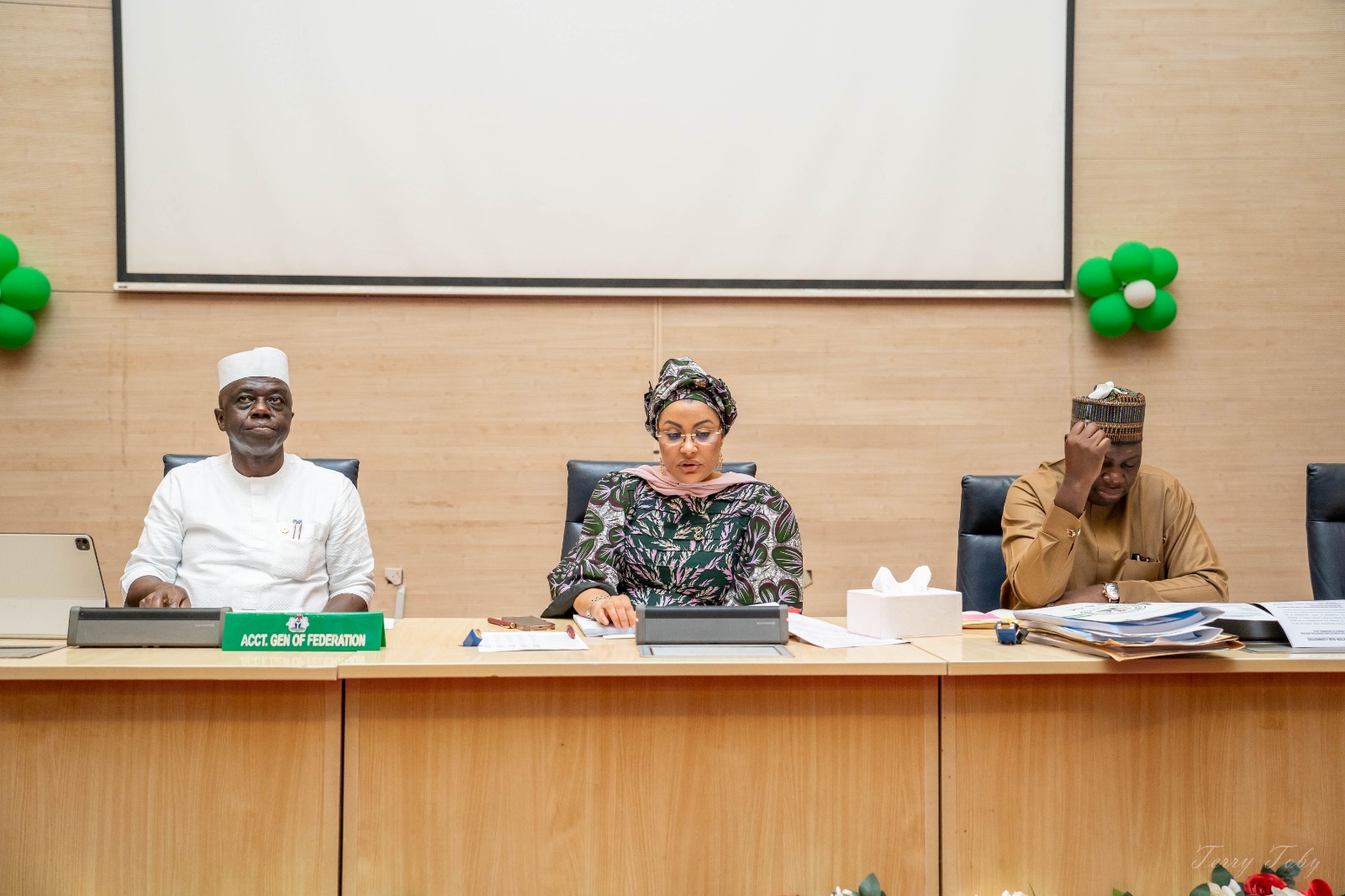
The Honourable Minister of State for Finance, Dr. Doris Uzoka-Anite, has chaired the December meeting of the Federation Account Allocation Committee (FAAC), the statutory platform through which Nigeria’s federally collected revenues are pooled and distributed monthly among the Federal Government, State Governments, and Local Government Councils.
At the meeting, FAAC considered a gross revenue of ₦2.343 trillion for November 2025, from which a total of ₦1.928 trillion was approved for distribution to support governance and public service delivery across the country.
The approved allocations were distributed as follows:
- Federal Government: ₦747.159 billion
- State Governments: ₦601.731 billion
- Local Government Councils: ₦445.266 billion
- Oil-Producing States (13% Derivation): ₦134.355 billion
The revenues shared were drawn from key statutory sources, including oil and gas royalties, Company Income Tax, Customs and Excise Duties, Value Added Tax (VAT), and the Electronic Money Transfer Levy. In line with established procedures, deductions were first made for collection costs and mandatory transfers before the balance was distributed according to constitutional provisions.
The Minister noted that while certain revenue streams recorded declines during the month under review, FAAC continues to play a critical role in ensuring stability, transparency, and predictability in revenue distribution to all tiers of government. These monthly allocations remain essential to sustaining public services nationwide, including the payment of salaries, execution of infrastructure projects, delivery of social programmes, and support for grassroots development.
Dr. Uzoka-Anite reaffirmed the Federal Government’s commitment to strengthening Nigeria’s public finance architecture under the Renewed Hope Agenda, emphasising that ongoing reforms are focused on expanding the revenue base, improving efficiency, and enhancing accountability in the management of public resources.
According to the Minister, prudent fiscal coordination and transparent revenue-sharing mechanisms remain central to supporting economic stability and enabling governments at all levels to meet the needs of Nigerians.